








Break free from legacy! Modernize your core with intelligent, AI-powered solutions
Remember that time you were showing your boss a “real-time” dashboard, and you both stood there awkwardly watching the loading icon spin? Well, folks, welcome to the world of event-driven architecture (EDA), where “real-time” actually means real-time, and not “let’s-grab-a-coffee-while-this-loads” time.
As cloud platforms such as AWS, Azure, and GCP have made large-scale data storage much more affordable, the industry needed to adapt to cloud-based solutions. ELT (Extract, Load, Transform) reversed the traditional model:
With ELT, big data projects can grow without hitting the resource limits of dedicated ETL engines. This shift has allowed organizations to manage streaming data, perform interactive analytics, and integrate various data sources more seamlessly than ever before.
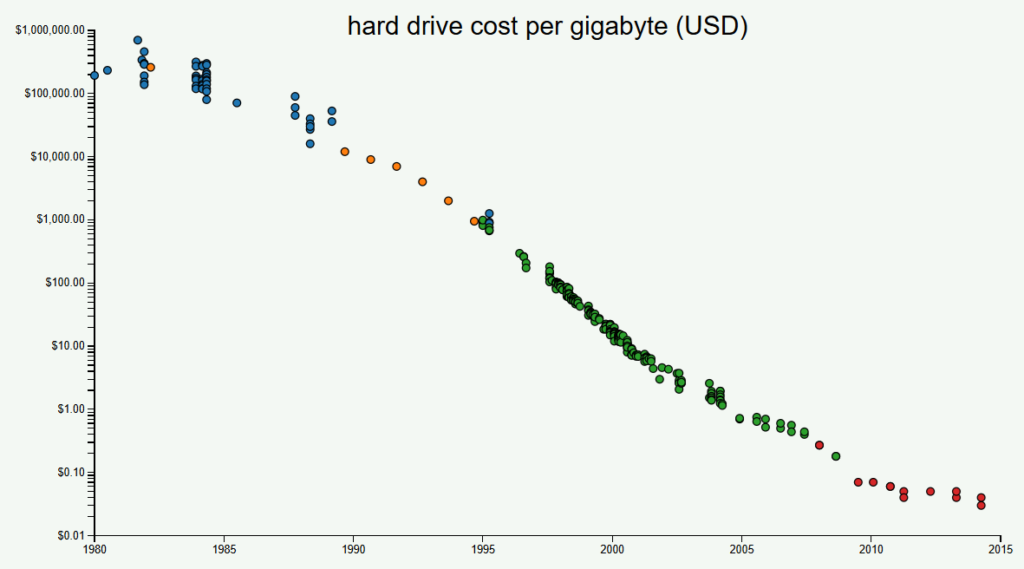
With so much buzz around modern cloud platforms and the rise of ELT Solutions, it begs the question: Is ETL Process truly a thing of the past? Let’s examine the fundamental differences between these approaches to see why each still has its place.
To understand the fundamental differences between ETL and ELT, here’s a brief comparison that emphasizes the unique advantages of each method in the context of data transformation:
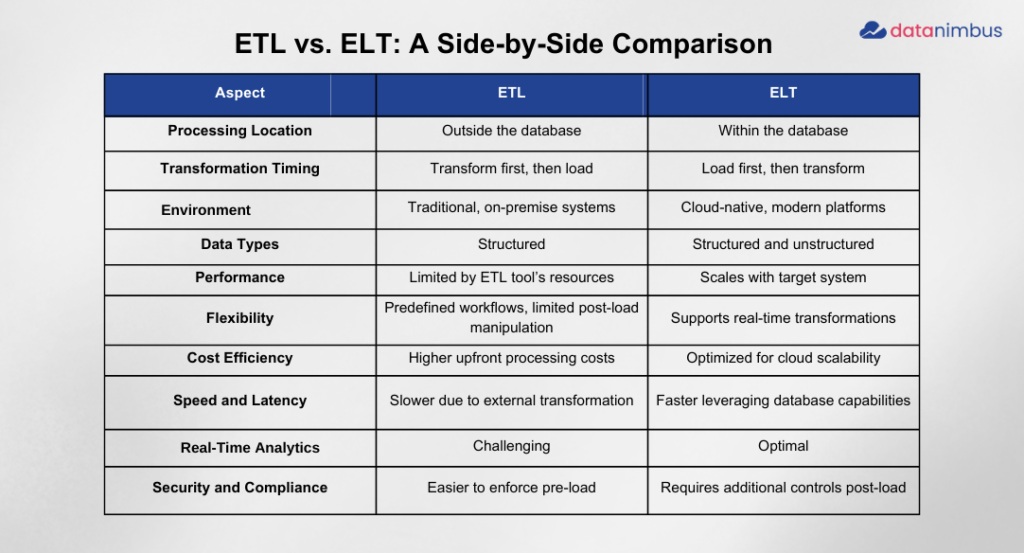
Key Takeaway: Understanding the key differences between ETL and ELT can greatly impact your data strategy. ETL still excels in scenarios where data quality and compliance checks are crucial before data is stored. Conversely, ELT is more suitable for high-volume, flexible, or rapidly changing datasets, especially in cloud environments.
As data volumes increase and enterprises adopt the cloud, ELT methods will continue to gain momentum due to their scalability and flexibility. However, ETL remains crucial for situations that require stringent quality checks, high compliance levels, or integration with legacy systems.
The bottom line is that the ETL process must evolve to meet modern data requirements: It’s not about permanently selecting one approach; it’s about choosing the right tool for each task. Platforms like Databricks and tools like DataNimbus Designer enable teams to implement a hybrid strategy, blending ETL and ELT techniques to suit each workflow’s specific needs in the modern data stack.
Ready to discover the best of both worlds? Contact us to learn how DataNimbus Designer can future-proof your data pipelines, enhance operational efficiency, and help you derive more value from your data.